

Understanding distances can sometimes be tricky, especially when we deal with measurements like feet, meters, or inches. One measurement that often comes up in construction, sports, or even everyday scenarios is 50 feet. But how big is 50 feet really? In this article, we will break down what 50 feet means, convert it into different units, and compare it with real-world examples to help you visualize it clearly.
Introduction: Visualizing 50 Feet
Fifty feet is a significant distance when you think about it in terms of your surroundings. For many people, it’s hard to picture what 50 feet looks like because we usually deal with smaller, familiar units in our daily lives, such as meters or yards.
To make this concrete, imagine a standard school bus. Most school buses are roughly 40 to 45 feet long. This means 50 feet is slightly longer than an average bus. Another way to think about it is in terms of rooms: if a large living room is 25 feet long, then 50 feet is equivalent to two such rooms placed end to end.
Understanding this distance is important not just for fun, but also in practical situations like construction, landscaping, sports planning, and city infrastructure.
50 Feet in Different Units
To help visualize 50 feet, it’s useful to convert it into units you may be more familiar with:
| Unit | Equivalent of 50 Feet |
| Meters | 15.24 meters |
| Yards | 16.67 yards |
| Inches | 600 inches |
| Centimeters | 1524 cm |
Meters: In most countries outside the U.S., distances are measured in meters. 15.24 meters is roughly the length of a medium-sized swimming pool.- Yards: In sports, especially football or soccer, 16.67 yards is easy to imagine as almost half of a football field’s width.
- Inches and Centimeters: These smaller units help in precise calculations, like building projects or crafting.
These conversions are practical when you need to communicate measurements internationally or compare distances in different systems.
Everyday Objects That Are About 50 Feet Long
Here are some common objects and structures that are approximately 50 feet long:
- School Bus: As mentioned, a typical school bus ranges from 40-45 feet, so 50 feet is slightly longer.
- Giant Tree: Some large trees, like certain oaks or redwoods, can have trunks or branches that stretch 50 feet.
- Basketball Court: An NBA basketball court is 94 feet long, so 50 feet is a bit more than half the length of a basketball court.
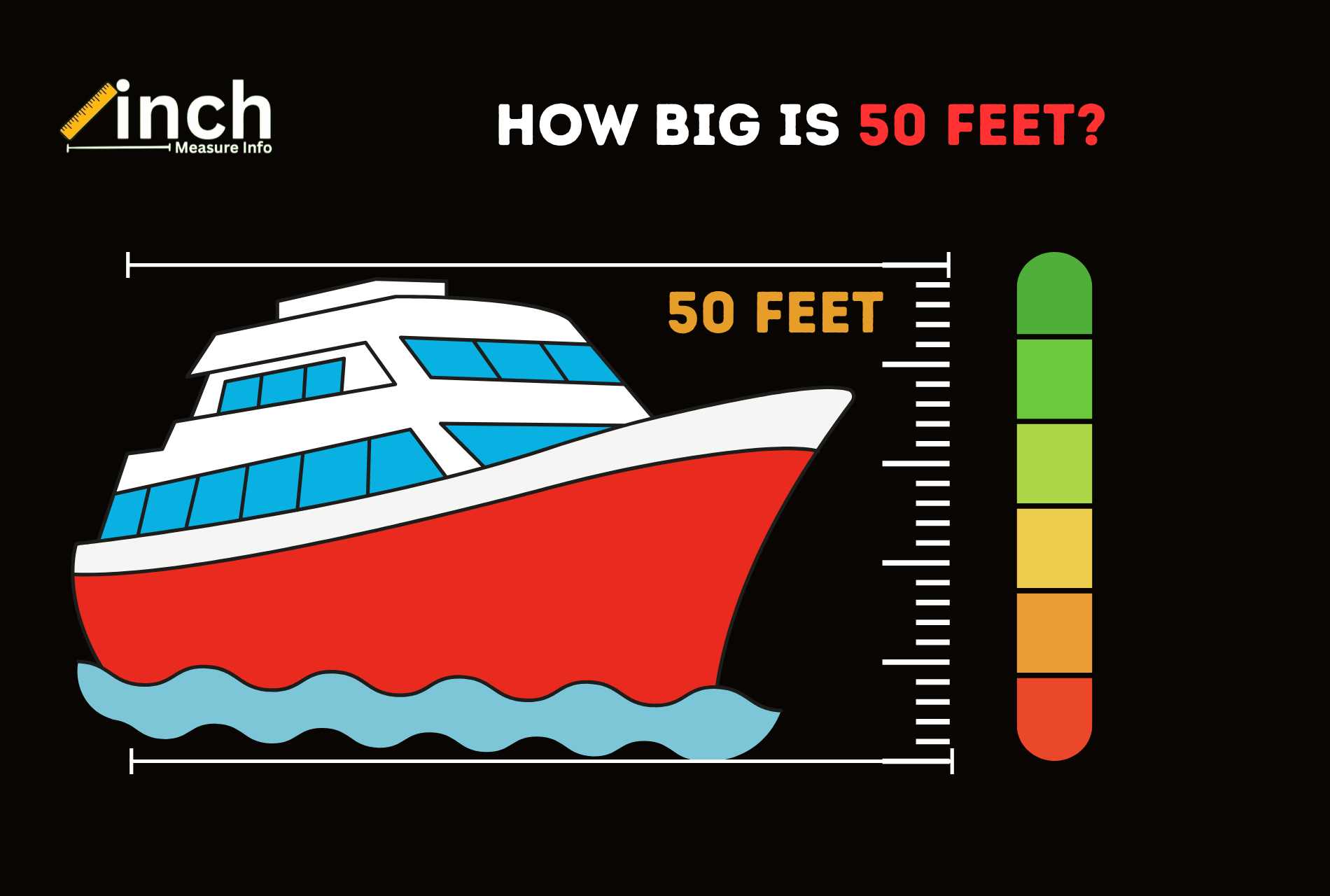
- Large Yachts: Many luxury yachts are close to 50 feet in length, making this distance easier to imagine if you’ve seen a marina.
By relating 50 feet to familiar objects, it becomes much easier to picture this length in real life.
50 Feet in Sports and Recreation
Sports fields and recreational areas often use feet as standard measurement units. Here’s how 50 feet fits in:
- Baseball: The distance between bases on a youth baseball field can be 50 feet. This makes it easier to understand the scale of smaller sports fields.
- Soccer: While soccer fields vary in size, a width of 50 feet could cover roughly one-third of a small-sided soccer field.
- Swimming Pools: A standard short-course swimming pool is 25 meters (82 feet), so 50 feet is a little over half the pool length.
- Track and Field: Long jump pits and some track sections are close to 50 feet, making it a common reference in athletics.
Understanding these examples helps athletes, coaches, and fans visualize distances accurately during training or games.
50 Feet in Nature and Outdoors
Nature offers some remarkable examples to help us grasp the size of 50 feet:
- Trees: Many mature trees, like certain pines or oaks, can be about 50 feet tall. Imagine standing at the base of such a tree and looking up—it’s an impressive height.
- Rivers or Waterfalls: Some small waterfalls drop about 50 feet, giving a sense of scale for natural landmarks.
- Parks: In parks, 50 feet could represent the distance from one end of a large open area to the other, or the length of a jogging path curve.
Seeing 50 feet in nature can help put the measurement in a perspective that is relatable and visually impressive.
Construction and Architecture Perspective
For architects, builders, and engineers, 50 feet is a standard measurement used in design and planning:
- Buildings: A two- to three-story building is often around 50 feet tall, including floors and roof.
- Walls and Fences: Long retaining walls, property boundaries, or decorative walls can reach 50 feet.
- Driveways and Parking Lots: A driveway or parking lot section of 50 feet can accommodate several cars parked in a line.
In construction, being able to visualize 50 feet helps in planning spaces efficiently and ensuring safety regulations are met.
50 Feet in Transportation
Transportation infrastructure frequently references feet for vehicle and road measurements:
- Trucks and Buses: Many semi-trucks, including the trailer, are close to 50 feet in length.
- Airplanes: Smaller private jets or regional aircraft may have wingspans or fuselage lengths around 50 feet.
- Parking Spaces and Roads: A 50-foot length can cover multiple parking spaces or a small section of a road, helping city planners design urban layouts.
By comparing 50 feet to vehicles, we get a practical understanding of its impact in real-life movement and logistics.
Fun Facts About 50 Feet
50 feet is more than just a number—it shows up in surprising ways:
- Historical Monuments: Some statues or obelisks around the world stand about 50 feet tall.
- Theme Parks: Roller coaster tracks often include 50-foot sections, offering a thrilling height for riders.
- Movies and Media: In films, visual effects often exaggerate 50 feet for dramatic effect, like giant monsters or towering buildings.
These fun facts make the measurement memorable and engaging, helping people retain the concept more easily.
Conclusion: Why Understanding 50 Feet Matters
Grasping what 50 feet looks like is useful in everyday life, from sports to construction, transportation to nature. By comparing it to buses, buildings, trees, and sports fields, it becomes easier to visualize and appreciate the scale of this distance.
Next time someone mentions 50 feet, you can imagine: a slightly longer bus, half a basketball court, or a tall tree, giving you a clear mental picture. Understanding measurements like this enhances spatial awareness and helps in planning, designing, or simply enjoying the world around you.
FAQs
1. How long is 50 feet in meters?
50 feet is approximately 15.24 meters.
2. What are real-life examples of 50 feet?
50 feet is about the height of a 4–5 story building or half the length of a basketball court.
3. Is 50 feet considered long?
Yes, 50 feet is a moderately long distance in everyday measurements, especially for indoor spaces.
