

1. Introduction
People have always been curious about extreme human heights. Whenever we hear phrases like “the tallest person in the world”, our minds instantly try to imagine how tall that actually is. Many people search for how tall is the tallest living man in the world because numbers alone are hard to visualize. A height written in feet or centimeters does not always give a clear picture unless we compare it with real-life objects like doors, rooms, or other people.
Explore Celebrity News and Updates
Another reason people search for this topic is simple curiosity. Human bodies normally grow within a certain range, so when someone grows far beyond that range, it naturally raises questions. People want to understand how rare it is, what daily life is like for such a tall person, and how that height compares to normal surroundings like homes, beds, cars, and furniture.
In this article, we will explore this topic in a clear and easy way. Instead of just throwing numbers at you, we will explain what this height really means, how it compares to everyday life, and why people find it so fascinating.
2. Clear Explanation
When we talk about the tallest living man in the world, we are referring to a person who is officially recognized for having the greatest height among people who are currently alive. This recognition is usually verified by medical professionals and international record organizations.
Human height is normally influenced by genetics, nutrition, and health during childhood. Most adult men fall within an average height range. However, in very rare cases, certain medical conditions can cause excessive growth. These conditions affect growth hormones in the body, leading to unusual height.
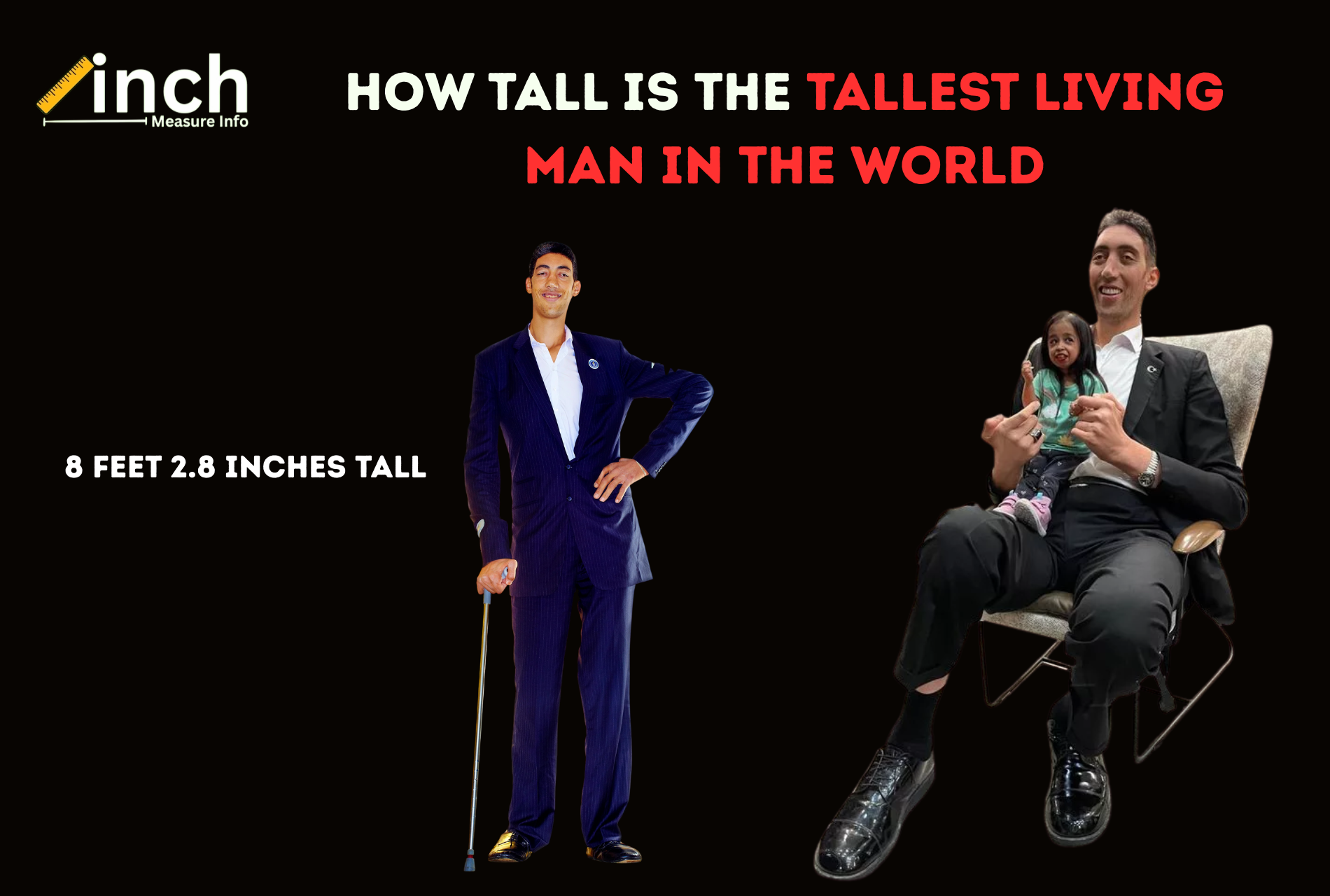
The tallest living man in the world today stands approximately 8 feet 2.8 inches tall, which is about 251 centimeters. This height is far beyond what most people see in daily life. To put it simply, this is not just “a bit taller than average”—it is an extreme height that changes how a person interacts with the world around them.
Understanding this height becomes much easier when we compare it with familiar objects and everyday situations, which we will do in the next section.
3. Real-Life Examples (Very Important)
Example 1: Standing Next to an Average Person
An average adult man is around 5 feet 7 inches tall. When the tallest living man stands next to an average person, the difference is shocking. His shoulders may be at the height of the other person’s head. This means if they take a photo together, the average person might barely reach the tall man’s chest.
In public places, this difference attracts attention instantly. People often look twice because the height difference feels almost unreal.
Example 2: Doors and Ceilings
Most standard doors are about 6 feet 8 inches tall. The tallest living man is much taller than that. This means he cannot walk through a normal door without bending down. In many homes, ceilings are around 8 feet high, which means his head may almost touch the ceiling while standing straight.
This example helps people understand that his height is not just impressive—it creates daily challenges.
Example 3: Beds, Sofas, and Cars
A standard bed is usually 6 to 6.5 feet long. For someone who is over 8 feet tall, sleeping comfortably on a normal bed is impossible. Custom-made beds are required. The same applies to sofas and cars. In a regular car, legroom is not enough, and special modifications are needed just to sit comfortably.
These examples clearly show that this height affects almost every part of daily life.
4. Use Cases
Understanding extreme height measurements like this is useful in many areas:
- Education: Teachers use such examples to explain human biology, genetics, and growth disorders.
- Construction and Design: Architects and designers learn why standard measurements do not work for everyone.
- Furniture and Clothing Industry: Custom furniture and clothing rely heavily on accurate height measurements.
- Medical Studies: Doctors and researchers study such cases to better understand growth-related conditions.
- General Knowledge: Many people simply want to understand the limits of the human body.
This topic is not just about curiosity—it connects to real-world applications in multiple fields.
5. Step-by-Step Method
If you want to understand or calculate this height yourself, here is a simple method:
- Start with the known height:
The height is 251 centimeters. - Convert centimeters to meters (optional):
- Divide by 100
- 251 cm = 2.51 meters
- Convert centimeters to feet and inches:
- 1 foot = 30.48 cm
- 251 ÷ 30.48 ≈ 8.23 feet
- 0.23 feet × 12 ≈ 2.8 inches
- Final height:
- 8 feet 2.8 inches
This step-by-step approach makes the number easier to understand and verify.
6. Conversion Table
| Measurement Type | Value |
| Height in centimeters | 251 cm |
| Height in meters | 2.51 m |
| Height in feet | 8.23 ft |
| Height in feet & inches | 8 ft 2.8 in |
This table helps readers quickly understand the height in different units.
7. FAQs Section
FAQ 1: Why do people search for how tall is the tallest living man in the world?
People search for this question mainly because extreme human traits naturally attract curiosity. Height is something everyone can relate to, so when someone reaches an unbelievable height, people want to understand how tall that really is. Numbers alone do not explain the reality, so readers look for detailed explanations, comparisons, and real-life examples. This topic also appears frequently in quizzes, documentaries, and school discussions, which increases interest over time.
FAQ 2: Is this height common or extremely rare?
This height is extremely rare. The vast majority of people fall within a normal height range. Reaching over 8 feet tall usually involves rare medical conditions related to growth hormones. Only a handful of people in recorded history have ever reached such a height. That is why this topic remains interesting year after year—it represents an extreme limit of human growth.
FAQ 3: Does being this tall affect daily life?
Yes, being this tall affects almost every part of daily life. Simple things like walking through doors, sitting in chairs, sleeping on beds, or traveling in vehicles become difficult. Most everyday objects are designed for average-sized people. As a result, very tall individuals often need custom-made furniture, clothes, and living spaces to function comfortably.
FAQ 4: How is such height officially measured?
Official height measurements are taken by medical professionals using standardized tools. The person must stand straight, barefoot, on a flat surface. Measurements are often taken multiple times to ensure accuracy. For world records, strict verification rules are followed to avoid errors or exaggeration.
FAQ 5: Can someone become this tall without medical reasons?
In most cases, reaching such an extreme height involves medical factors. Genetics alone rarely produce this result. Growth hormone-related conditions usually play a role. Without these factors, it is very unlikely for someone to grow this tall naturally.
8. Common Mistakes
One common mistake people make is confusing past record holders with living individuals. Some people in history were taller, but they are no longer alive. Another mistake is misunderstanding measurements, such as mixing feet with inches or rounding numbers incorrectly.
People also often underestimate how tall 8 feet really is. Without comparisons to doors, beds, or other people, the number does not feel real. Lastly, some assume that being extremely tall is always an advantage, ignoring the daily challenges that come with it.
9. Conclusion
Understanding how tall is the tallest living man in the world is about more than just a number. It helps us see how human bodies can vary far beyond the average and how such differences affect daily life. By using real-life examples, clear explanations, and simple conversions, this height becomes easier to imagine and understand.
Instead of focusing only on records, it is important to understand the practical reality behind such extreme measurements. When we do that, numbers turn into real experiences, and curiosity turns into meaningful knowledge.
