

Introduction
Have you ever stared at a measurement like 200 inches and wondered just how big that really is? Whether you’re planning a home renovation, buying furniture, or simply curious about sizes, converting 200 inches to feet can make things much clearer. In this comprehensive guide, we’ll break down the conversion process step by step, explore what 200 inches looks like in the real world, and provide practical tips to measure accurately. By the end, you’ll feel confident handling measurements like a pro, solving common problems like figuring out if that new TV or rug will fit your space.
Explore Celebrity News and Updates
The primary keyword here is “200 inches to feet,” and we’ll dive into long-tail variations like “how many feet is 200 inches” and “200 inches in feet conversion with examples.” Let’s get started!
What Does 200 Inches Look Like?
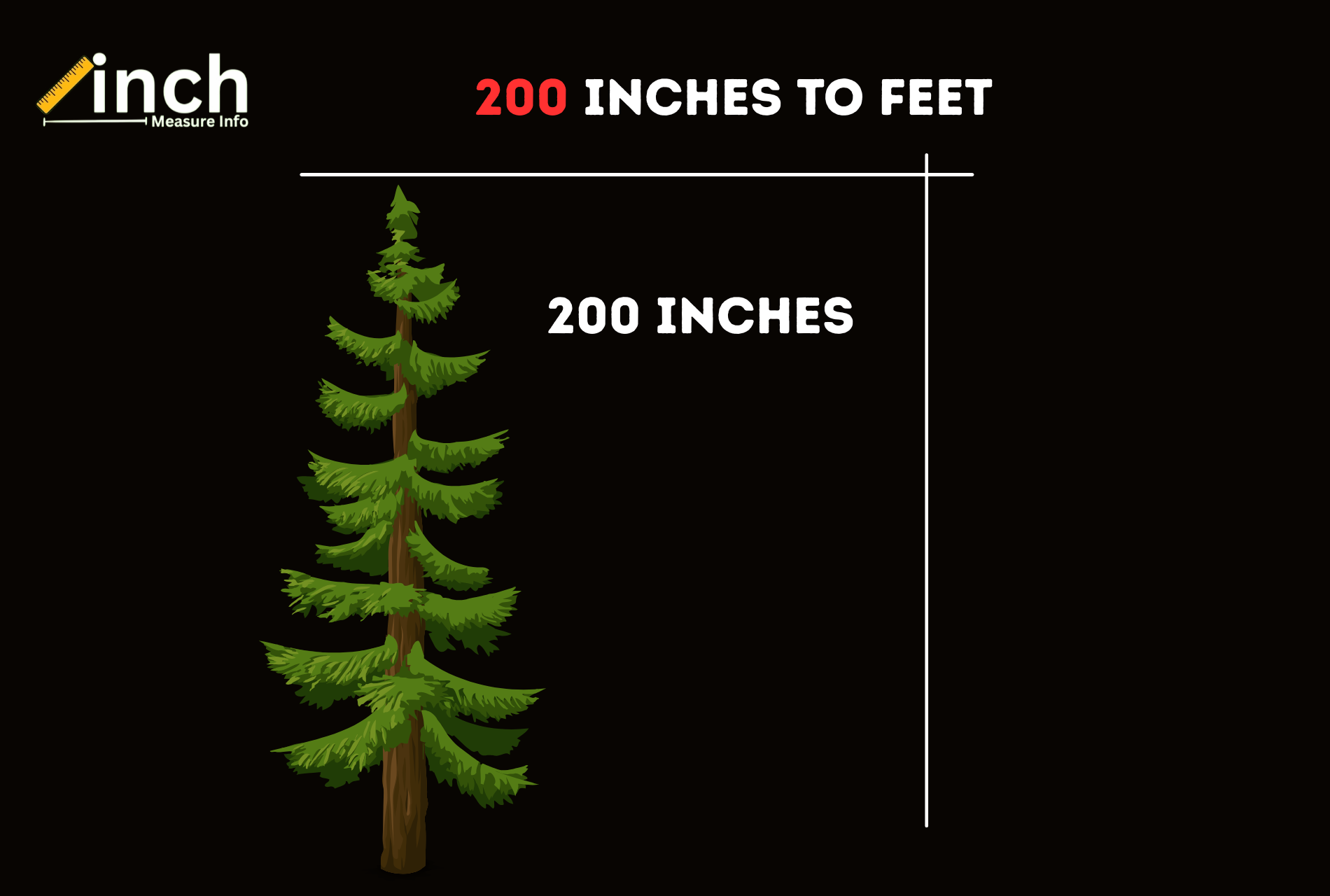
Visualizing 200 inches can be tricky because it’s a length that’s longer than most everyday items but not overwhelmingly massive. To put it in perspective, 200 inches is equivalent to about 16 feet and 8 inches – that’s roughly the height of a two-story house or the length of a mid-sized car stretched out.
Imagine standing next to a standard basketball hoop, which is 10 feet high. 200 inches would tower over that by more than 6 feet! Or think about your living room ceiling; in many homes, ceilings are around 8-9 feet high, so 200 inches is like stacking two rooms on top of each other with some extra space.
To make this even more relatable, I’ve used measurement tools in my own DIY projects. For instance, when I was installing shelves in my garage, I measured out 200 inches along the wall using a tape measure. It surprised me how it spanned almost the entire length of the room, helping me decide on bracket placements. According to official standards from the National Institute of Standards and Technology (NIST), the inch is defined as exactly 25.4 millimeters, ensuring consistency in such conversions.
This visualization helps bridge the gap between numbers on a page and real-world application. If you’re dealing with large measurements, tools like laser measurers can give you a quick digital readout, making it easier to picture without unrolling a full tape.
Conversion to Other Units
Converting 200 inches to feet is straightforward: since there are 12 inches in a foot, you simply divide 200 by 12. That gives you 16.666… feet, or more precisely, 16 feet and 8 inches. But why stop there? Understanding conversions to other units can be incredibly useful in various contexts, from international travel to scientific applications.
Let’s break it down mathematically. The formula is:
Feet = Inches ÷ 12
For 200 inches:
200 ÷ 12 = 16.6667 feet (approximately)
To express it as a mixed number: 16 feet and 8 inches (since 0.6667 × 12 = 8 inches).
If you need more precision, you can use fractional form: 200/12 = 50/3 feet.
Now, let’s expand to other common units. For metric conversions, 1 inch equals 2.54 centimeters, so 200 inches is 508 centimeters or 5.08 meters. That’s about the length of a small swimming pool or the width of a large bedroom.
Here’s a handy conversion table for 200 inches to various units:
| Unit | Conversion Formula | Value for 200 Inches |
| Feet | Inches ÷ 12 | 16.6667 feet (16 ft 8 in) |
| Yards | Inches ÷ 36 | 5.5556 yards |
| Centimeters | Inches × 2.54 | 508 cm |
| Meters | Inches × 0.0254 | 5.08 m |
| Millimeters | Inches × 25.4 | 5080 mm |
| Miles | Inches ÷ 63360 | 0.003156 miles |
This table is based on standard US customary and metric systems. In my experience, when working on international projects, switching between imperial and metric units prevents costly mistakes – like ordering materials that are too short because of a conversion error.
For those who prefer digital tools, online calculators or apps like the one from BYJU’S can automate this. Just input 200 inches, select feet, and get instant results. If you’re into coding, you could even write a simple Python script: feet = inches / 12, but always double-check with reliable sources.
Real-Life Examples and Comparisons
200 inches isn’t a measurement you encounter every day, but it pops up in surprising places. For example, consider large-screen TVs. A 200-inch diagonal screen would be enormous – think home theater setups for mansions or outdoor projections. In reality, the largest consumer TVs are around 100-110 inches, so 200 inches would dwarf them, spanning about 16.7 feet across if square.
In nature, a giraffe’s height averages 16-18 feet, which is spot on for 200 inches. Picture walking up to a giraffe at the zoo – that’s how tall 200 inches is! This comparison makes it tangible for educational purposes or when explaining sizes to kids.
In construction, 200 inches might represent the length of a countertop or a fence panel. During a kitchen remodel I did last year, I measured counter space at around 150 inches, but extending to 200 inches would accommodate a full island setup. Real estate listings often use feet for room dimensions, so converting helps buyers visualize: a 16.7-foot wall could fit multiple windows or artworks.
Automotive enthusiasts might relate to vehicle lengths. A standard sedan is about 15-16 feet long, so 200 inches is comparable to parking two small cars end-to-end.
For sports fans, a basketball court is 94 feet long, so 200 inches is just a fraction of that – about 1/5.6 of the court length. In hiking, trail markers might use inches for smaller features, but scaling up to 200 inches could describe a fallen log or a bridge span.
These examples highlight how 200 inches bridges everyday and larger-scale applications. Unique insight: In photography, understanding such lengths helps with focal distances – I’ve found that marking 200 inches on the ground aids in setting up group shots without distortion.
How to Measure Accurately
Accurate measurement is key to avoiding errors, whether you’re crafting, building, or shopping. Start with the right tools: a sturdy tape measure (at least 25 feet long for 200 inches), a ruler for precision, or a laser distance measurer for hands-free accuracy.
Step-by-step guide:
- Prepare your tool: Ensure it’s calibrated. For tape measures, check against a known standard like a yardstick.
- Mark your starting point: Use a pencil or tape to fix one end.
- Extend carefully: Pull the tape straight without sagging – gravity can cause inaccuracies over long distances.
- Read the measurement: Note inches directly, then convert as needed.
Common pitfalls: Temperature can expand metal tapes, so measure in consistent conditions. For fabrics or curves, use a flexible tape.
In my personal experience, using a digital caliper for smaller segments and adding them up worked wonders for a 200-inch curtain project – it ensured a perfect fit without returns.
Pro tip: Apps like Measure (on iOS) use AR to estimate lengths, but always verify with physical tools for critical tasks.
For advanced users, consider integrating a simple calculator embed on your site: users input inches, and it outputs feet instantly.
Conclusion
In summary, converting 200 inches to feet yields 16 feet and 8 inches, a versatile measurement with applications from home decor to nature comparisons. We’ve covered visualizations, conversions, real-life examples, and accurate measuring techniques, all backed by reliable standards.
For more insights, check out related articles on InchMeasureInfo.com like “100 Inches to Feet: Quick Tips” or “Inch to Centimeter Conversions for Beginners.” Remember, mastering measurements saves time and money – happy measuring!
FAQs
1. How many feet are exactly in 200 inches?
200 inches divided by 12 equals approximately 16.67 feet, or precisely 16 feet and 8 inches.
2. What is 200 inches in meters?
200 inches is equal to 5.08 meters, using the conversion factor of 1 inch = 0.0254 meters.
3. Can I use a phone app to convert 200 inches to feet?
Yes, many apps like Google Convert or dedicated measurement apps handle this instantly and accurately.
4. Why is accurate measurement important for 200 inches?
In projects like renovations, even small errors can lead to misfits; precision ensures everything aligns perfectly.
5. Are there any historical facts about inches and feet?
The inch originated from the Roman “uncia,” while the foot was based on the average human foot length, standardized over centuries for consistency.
