

275/60R20 in Inches: Exact Conversion and Full Tire Specifications
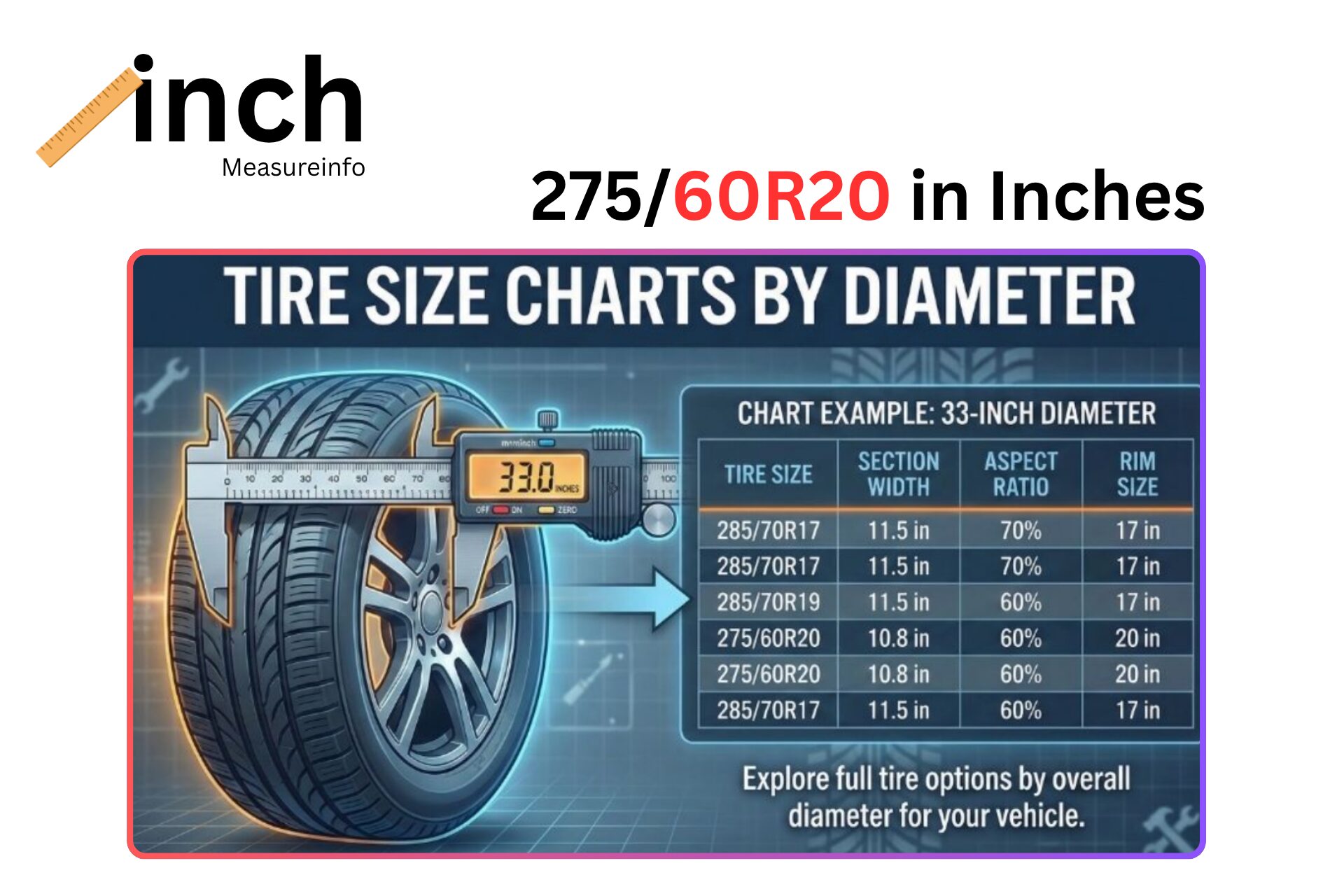
A 275/60R20 tire measures approximately 33.0 inches in overall diameter, 10.83 inches in section width, and 6.5 inches in sidewall height. It fits a 20-inch rim and has a circumference of about 103.6 inches, completing roughly 612 revolutions per mile.
This popular metric tire size translates cleanly to a “33-inch” tire in the imperial system commonly used by truck and SUV enthusiasts. The conversion helps when comparing all-terrain, highway, or performance tires, checking clearance for lifts or leveling kits, and ensuring speedometer accuracy.
Related Guides
- Centimeter to Tommer Conversion Guide – Complete CM to Inches (Tommer) calculator and explanation.
- How to Convert CM to Inches Easily – Step-by-step quick conversion method for daily use.
- Inch to CM Conversion Chart – Reverse conversion table for fast reference.
- Measurement Conversion Tools – All unit converters in one place (cm, inches, feet, etc.).
Quick Facts Table
| Specification | Metric | Inches | Notes |
|---|---|---|---|
| Section Width | 275 mm | 10.83″ | Tread width |
| Aspect Ratio | 60% | – | Sidewall is 60% of width |
| Sidewall Height | 165 mm | 6.50″ | One side |
| Overall Diameter | 838 mm | 33.0″ | Total height |
| Rim Diameter | – | 20″ | Wheel size |
| Circumference | 2,632 mm | 103.6″ | Rolling distance |
| Revolutions per Mile | – | 612 | Approximate |
| Typical Rim Width Range | – | 7.5–9.5″ | Recommended |
Understanding the 275/60R20 Tire Size Breakdown
Tire sizes follow a standardized format: Width/Aspect Ratio Construction Rim Diameter.
- 275 represents the section width in millimeters — the widest point of the tire’s sidewall-to-sidewall measurement when mounted and inflated.
- 60 is the aspect ratio, meaning the sidewall height equals 60% of the section width.
- R indicates radial construction, the industry standard for passenger and light truck tires.
- 20 is the rim diameter in inches, the wheel the tire mounts onto.
This combination delivers a balanced profile: wide enough for stability and load-carrying but with sufficient sidewall for comfort and light off-road use.
Precise Inch Conversions for 275/60R20
Section Width: 275 mm ÷ 25.4 = 10.83 inches. This is the nominal tread width; actual contact patch varies slightly with inflation and load.
Sidewall Height: 275 mm × 0.60 = 165 mm. Then 165 ÷ 25.4 = 6.50 inches per side.
Overall Diameter: Rim diameter + 2 × sidewall height = 20 + (2 × 6.50) = 33.0 inches. Real-world measurements from manufacturers typically range 32.9–33.1 inches depending on brand and tread depth.
Circumference: π × diameter ≈ 3.1416 × 33.0 = 103.6 inches.
These figures come from standard tire industry calculations and are corroborated by major tire calculators and manufacturer data.
Why This Size Is Popular on Trucks and SUVs
The 275/60R20 offers an excellent compromise for full-size pickups (Ford F-150, Ram 1500, Chevy Silverado), SUVs (Tahoe, Yukon, Expedition), and crossovers. It provides:
- Strong load capacity for towing and hauling
- Good ground clearance without major lift kits
- Balanced on-road manners and fuel efficiency
- Availability in all-season, all-terrain, and highway terrains
Many owners choose it as an upgrade from factory 265/60R20 or 275/55R20 tires for added height and cushioning.
Common Equivalents and Comparisons
- 33×10.5R20 or 33×11.5R20: Nearly identical diameter with slight width variations.
- 275/55R20: About 31.9 inches diameter — 1.1 inches shorter, affecting ride height and speedometer.
- 285/60R20: Slightly taller and wider at ~33.5 inches.
- 33×12.5R20: Popular flotation option with wider stance but similar height.
Always verify exact fitment for your vehicle using a tire calculator, as actual mounted diameter can vary by 1–2% based on brand.
Performance and Practical Considerations
Ground Clearance: A 33-inch diameter typically adds meaningful clearance compared to lower-profile options while maintaining steering response.
Speedometer Impact: Switching to this size from a smaller original tire may cause a minor reading difference. A 1-inch diameter change equals roughly 3% speedometer variance.
Load and Inflation: Check the tire’s load index and maximum PSI. Most 275/60R20 tires in LT (Light Truck) versions handle heavier loads than P-metric versions.
Fuel Economy and Handling: Wider tires can slightly reduce MPG but improve stability. The taller sidewall absorbs bumps better than low-profile alternatives.
Source Verification
All measurements in this article derive from standard tire industry formulas (width in mm to inches using 25.4 conversion factor) and are cross-verified with data from Tire Rack, Discount Tire, manufacturer specifications, and independent calculators like those on 1010Tires and TacomaWorld. Specific tire models may vary by ±0.2–0.5 inches due to tread design and inflation.
FAQ Section
What is 275/60R20 in inches exactly? It converts to 10.83″ wide, 6.5″ sidewall, and 33.0″ overall diameter.
Is 275/60R20 the same as a 33-inch tire? Yes — it is commonly referred to as a 33″ tire with very close overall height.
Will 275/60R20 fit my truck? It depends on your vehicle, wheel offset, and any modifications. Most half-ton trucks accept them with no or minor rubbing.
How much taller is 275/60R20 than 275/55R20? Approximately 1.08 inches taller in overall diameter.
What is the circumference of a 275/60R20 tire? About 103.6 inches.
Can I replace 275/60R20 with 33×12.5R20? Yes, they have nearly identical diameters, though the wider tire may require checking for rubbing on fenders or suspension components.
Conclusion
The 275/60R20 in inches delivers a versatile 33.0 x 10.83-inch package that balances performance, comfort, and capability for modern trucks and SUVs. Understanding these exact conversions helps you make informed decisions on replacements, upgrades, or fitment modifications. Always consult your vehicle’s manual and a trusted tire professional for final compatibility.
